When a self-employed company or seller introduces products to the European market, one of the first concerns is to ensure that such products comply with current regulations in the European Union. Two of the terms that usually appear in that context are: CE marking and Declaration of conformity. Although they are often confused, each one fulfills different functions and meet specific requirements according to the product category and the level of risk. In this article, with the aim that you can effectively manage the import and marketing of your products in the European market, we tell you in detail what each one means, when it is required, how to obtain them and what the legal consequences of not having these certifications can be.
What is the Declaration of Conformity and what is it for?
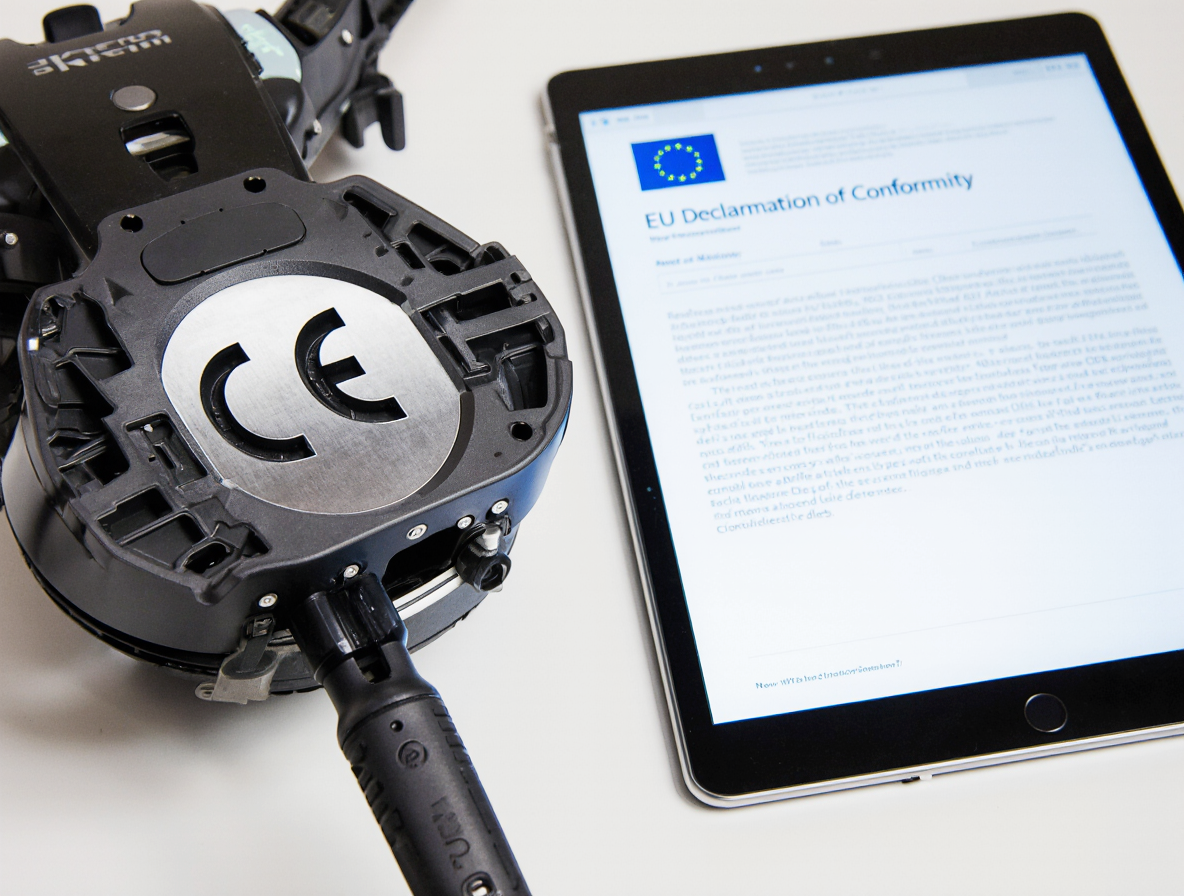
The EU Declaration of Conformity It is, in essence, a formal and legal document through which the manufacturer, or its authorized representative in the European Union, declares under his responsibility that his product complies with all applicable legal and technical requirements. This document is mandatory for all products that have the CE marking, which is the Official sign that the product complies with EU regulations.
And why is it so important? Because the declaration of conformity represents the self-declaration of the manufacturer or importer that his product complies with the relevant European directives and with the required harmonized standards. It is an act of responsibility and legal compliance, and without it, The product cannot carry the CE marking or be legally marketed in the EU.
Requirements and basic content of the Declaration of Conformity
In order to be correctly elaborated, the declaration must include certain ESSENTIAL DATA that certify the conformity of the product and allow its traceability. Although each regulation has its own declaration of conformity, these are some of the most common data:
- Name and address of the manufacturer o Your authorized representative: It is essential to be able to identify who signs the statement.
- Serial number, model or product identification: To make it possible to track the product in case of future incidents.
- Expression of responsibility: It is indicated that the manufacturer or its representative assumes full legal responsibility for regulatory compliance.
- means of identification: To facilitate the traceability of the product, such as labels or identification codes.
- Data of the notified body: In the event that an external body has been used to assess conformity, its information must be included.
- Harmonized regulations and regulations: Specify the European Directives applied and the technical standards used to demonstrate compliance.
- Signature and date of issue: The signature of the person responsible for the statement.
- Additional information and translations: Particularly relevant if the product will be sold in different EU countries, where it must be translated into the corresponding official languages.
Who signs the declaration of conformity
It is important to note that the responsibility of signing this document rests exclusively on the manufacturer or its authorized representative established in the European Union. Neither an external consultant, nor the laboratory that has carried out tests, nor the importer (unless he acts as an authorized representative), can sign instead of the person in charge. The signing of the statement implies that that person assumes all legal responsibility that the product meets the requirements.
What does it mean not to have the Declaration of Conformity or the CE marking?
Not having these documents is not just an administrative issue; but it can also have serious legal consequences and economic sanctions. European legislation is clear in that the marketing of products without the corresponding declaration, when required, constitutes a serious infraction that can be sanctioned with:
- Paralysis at customs: The merchandise can be retained, generating additional costs and delays.
- Significant economic fines: Sanctions may affect the profitability of the product.
- Withdrawal from the market: Authorities may require immediate removal of the product on any distribution channel.
- marketing prohibition: In an extreme case, the sale of the product in the European market can be permanently prohibited.
- civil and criminal liability: In case of damages or accidents, the absence of the documentation increases the responsibility of the manufacturer or importer, being able to carry criminal penalties.
For these reasons, meeting EU requirements not only avoids sanctions, but also brings confidence to consumers and improves the brand’s reputation.
What is CE marking and when is it needed?
The CE marking It is different from the EU Declaration of Conformity, although both are closely linked. the CE marking It is not a document or a certificatebut a Physical marking that the manufacturer placed on the product (or on its nameplate, packaging or documentation) under your sole responsibility.
This marking indicates that the product complies with All applicable legal requirements of the European Union in terms of safety, health, consumer protection and, where appropriate, environmental protection. Its placement is mandatory for those products regulated by EU directives or regulations of harmonization that so require.
in certain products and categories, especially those considered to be higher risk, such as some personal protective equipment, specific machinery or medical devices; The regulations require that Before placing the CE marking, intervene a notified body.
Steps to get both documents and ensure compliance
To market products in the European Union with legal and technical certainty, the correct process is as follows:
- Identification of requirements: Analyze which directives, regulations and standards are applicable to the product.
- Product evaluation: Determine whether the conformity assessment can be done through the manufacturer’s self-monitoring or if the intervention of a notified body is mandatory.
- Preparation of the technical file: Document the design, manufacture, risk analysis, tests and verifications that demonstrate the conformity of the product.
- Drafting of the EU Declaration of Conformity: Prepare the legal document in which the manufacturer formally assumes responsibility for regulatory compliance.
- Notified body intervention (if applicable): Carry out the tests or evaluations required by the regulations for products of greater risk.
- CE marking placement: Once compliance has been demonstrated, the manufacturer places the CE marking and can legally market the product in the EU.
How can Zertify help you?
From Zertify, we help you comply with all current European regulations in a structured and efficient way. Our automated regulatory compliance management platform identifies in seconds the regulations applicable to your physical product and generates in a few minutes the technical documentation necessary to operate in any country of the European Union.
We accompany you from the initial evaluation of the product to the correct preparation of technical documentation and declaration of conformity, and we guide you in the process so that the CE marking is placed correctly, in accordance with applicable legislation. In addition, when necessary, we coordinate laboratory tests with accredited entities, optimizing times and costs compared to traditional management.
Zertify centralizes all the document management of your physical products in a single environment, with regulatory guarantees and complete traceability, so that you can focus on selling and growing your business with the peace of mind of complying with the law.
Ultimately, both EU Declaration of Conformity like the CE marking They are essential elements to guarantee the legality, safety and confidence of the products that are marketed in the European Union. Although they fulfill different functions, both are part of the same regulatory compliance system and their correct management is key to avoiding sanctions, customs blockades or withdrawals from the market.
At Zertify we simplify all this process and generate the technical documentation you need so that you can operate with total safety and efficiency in the European Union.. Do you have questions about your product or do you want to start the compliance process? Contact us and we take care of everything.